19th International Conference on Social Computing, Behavioral-Cultural Modeling, & Prediction and Behavior Representation in Modeling and Simulation
October 12-14, 2026, Hybrid.
Carnegie Mellon University, Pittsburgh, PA 15213
Keynote Speaker(s)
Keynote 1: October 12, 2026, 17:00 - 18:20, In-Person
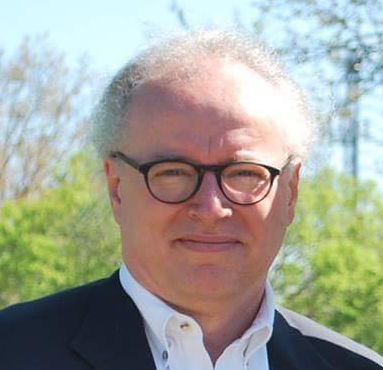
Robert Axtell, Ph.D., Professor of Computational Social Science, George Mason University and the Sante Fe Institute
Title: Social Science with ALL the Data
Abstract: With the enormous growth in the availability of social data we are approaching, in some areas of the social sciences, the situation in which, to a first approximation, all relevant data are available. This is in stark contrast to earlier eras that faced a paucity of data. On one hand, this situation has given rise to the phenomenon of non-social scientists ostensibly doing social science research simply by reporting on data. Such 'data-only' papers can sometimes make a contribution, and are often entertaining for their authors's lack of background in any kind of social theory. In a certain sense, such work is pre-scientific—Darwin: "…all observation must be for or against some [theoretical] view if it is to be of any service." On the other hand, in domains with rich, essentially comprehensive/exhaustive data and researchers steeped in theory, a different kind of problem arises: there do not exist theories or models that can explain all of the data, i.e., the relevant science is incomplete, often badly. I will illustrate these ideas using a family of models describing the behavior of U.S. business firms, entities on which there exist comprehensive data (all firms) of significant depth over half a Century. Nobel Prizes have been awarded for theories of the firm and industrial organization. However, I will argue that none of the extant theories place any significant restrictions on firm-level micro-data. This not to say that existing theories are empirically vacuous, just that they are not relevant to the data on the entities they purport to describe/explain. A way out of this morass will be discussed for the theory of the firm, and it remains to be seen how general the approach is for social theories in general.
Bio: Robert Axtell is Professor of Computational Social Science at George Mason University and the Santa Fe Institute. His research focuses on agent-based modeling, complex systems, and the dynamics of social and economic systems. He has published extensively on the behavior of firms, markets, and social networks, and has contributed to the development of computational methods for studying social phenomena. He earned his Ph.D. from Carnegie Mellon University.
Keynote 2: October 13, 2026, 17:00 - 18:20, In-Person
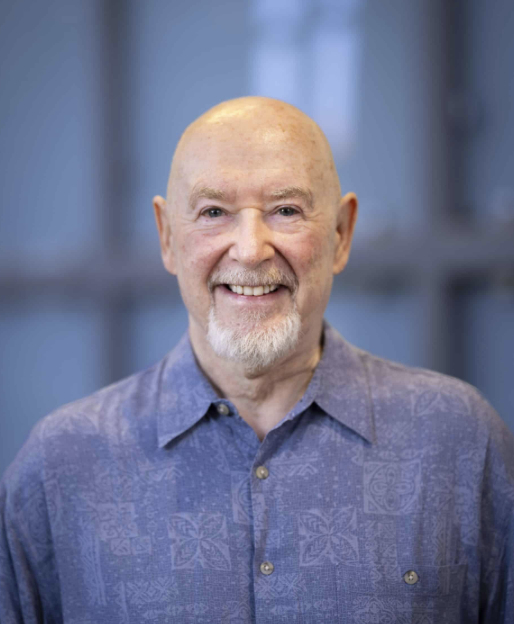
Michael Prietula, Ph.D., Senior Research Scientist, Institute for Human & Machine Cognition (IHMC)
Title: The Next AI Challenge: Collaborative Intelligence - Humans, Agents, and the UX Catechism
Abstract: It was about seventy years ago that Herbert Simon and Allen Newell set the stage for artificial intelligence at Carnegie Mellon, posing the question of how to put intelligent problem solving into a computational form. I am fortunate to have learned that line of thinking here at CMU, working alongside Newell, Simon, and Kathleen Carley. Now we face a different sort of challenge as AI agents grow in capability and form: what underlies effective ways for humans and agents to work in concert, or for the agents to collaborate among themselves? To start, I will offer some personal reflections on my dealings with AI over the years. Then I put forward what we call the UX Catechism, echoing DARPA's approach to assessing and comparing proposed projects by articulating a series of six questions that address core AI risk components—does the AI say the right thing, to the right person, at the right time, in the right way, for the right reason, and within the right rules? Further context-dependent specifications and assessments of these principles are defined in situ. The UX Catechism helps developers, users, managers, and others understand and communicate how AI contributes to their task objectives, creating engagements that are effective, trustworthy, and ethical.
Bio: Michael Prietula is a Senior Research Scientist at IHMC. He is also a Professor Emeritus from Emory University (both the Goizueta Business School and the Rollins School of Public Health).
Michael studies collective intelligence—how people, organizations, and artificial intelligence systems gain, share, and coordinate knowledge to solve complex problems. His interdisciplinary research spans cognitive science, artificial intelligence (AI), organizational behavior, and public health, with a career devoted to understanding how intelligent systems can augment human capabilities in ways that are cooperative, meritorious, and ethical. He serves on key standards-oversight committees that address AI and ethics within the Institute for Electrical and Electronics Engineers (IEEE) and the American Public Health Association (APHA).
At IHMC, Michael's research focuses on trustworthy human-AI collaboration, policy-governed intelligent agents, ethical AI, and multi-agent systems for public health and other high-consequence domains. His work seeks to develop collaborative AI systems that are explainable, adaptive, and effective at working with people while operating within ethical, organizational, and regulatory constraints.
Michael holds a Ph.D. in Information Systems, with minors in Computer Science and Psychology, from the University of Minnesota, a Masters in Instructional Design from Florida State University, and a Master's in Public Health (MPH) from the University of Florida.